
A Tiaki Whenua rōpū, offered in partnership with Unitec, is supporting wāhine at Te Whare Hīnātore to heal through connection with the whenua and caring for a precious local resource.
Te Whare Hīnātore is Te Tāpui Atawhai – Auckland City Mission’s kaupapa Māori-led transitional housing service for women – a safe, welcoming community where women can heal and grow. Known as raukura*, wāhine stay for 12 weeks - longer if needed - and are supported through a programme of wraparound care, tailored to their individual journeys.
The Tiaki Whenua rōpū offers raukura the opportunity to help care for and restore the local environment. The rōpū regularly spends time at Te Noho Kotahitanga Marae at Unitec’s Ōwairaka Mt Albert campus. There they care for Te Rangimārie Pā Harakeke, a taonga whenua [natural treasure] of the marae which is fed by Te Waiunuroa o Wairaka, an aquifer-fed natural spring that flows through the campus. This mahi is supported by Te Noho Kotahitanga Marae, and guided by Kaitiaki Taiao | Senior Lecturer, Hinewaimarama Reihana-White (Ngāti Whātua, Ngāti Hineāmaru, Ngāti Maniapoto).
The Tiaki Whenua rōpū contribute to a wider collective of kaitiakitanga at Te Noho Kotahitanga marae, “Ngā Kaitiaki”, whose main objective is to care for the mauri of Te Waiunuroa o Wairaka for future generations.
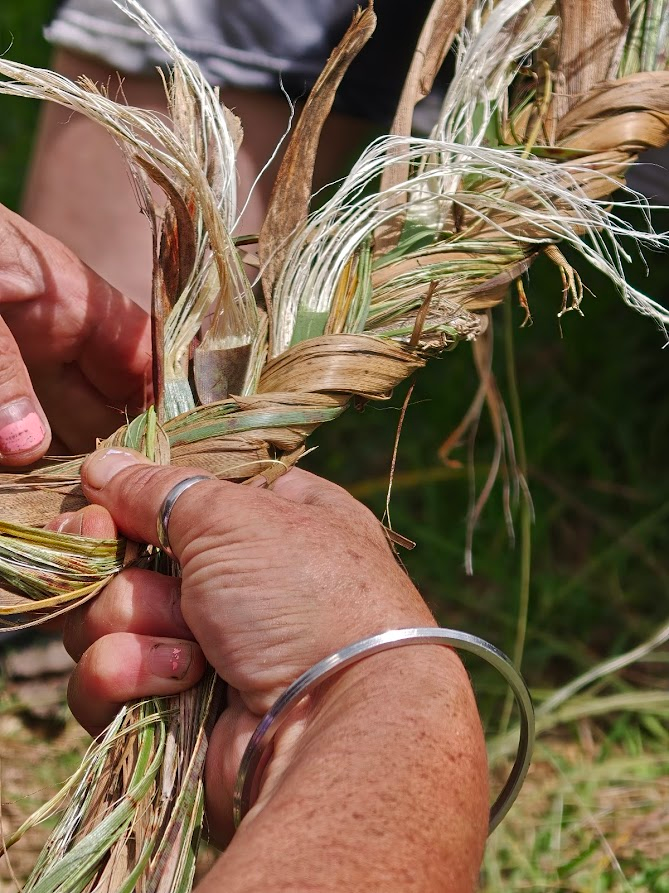
Through work such as harvesting harakeke [NZ flax], weaving papawai [harakeke mats] to provide habitat for life in the puna [spring] and awa [stream], gathering watercress and clearing channels to restore the flow of the water, raukura contribute to the health of te taiao [natural world].
Their contribution extends beyond the puna and the awa to the moana. Raukura have helped to weave taura kūtai [mussel ropes], part of an iwi-led collaboration with Ngāti Whātua Ōrākei to regenerate kūtai habitats in Ōkahu Bay. As Whaea Hinewaimarama explains, “creating habitat is a recurring theme of this mahi… for fish and tuna in the awa, and for kūtai in the moana.”
For raukura, the impact goes far beyond environmental restoration. Being part of this mahi creates space for healing through connection to the natural world, even while living in the central city. “Connecting to Papatūānuku… provides a space for wellbeing to manifest,” says Whaea Hinewaimarama. “There’s reciprocity. As they transform the whenua, they transform themselves.”
*an adornment of white feathers, symbolizing they are beautiful and treasured