
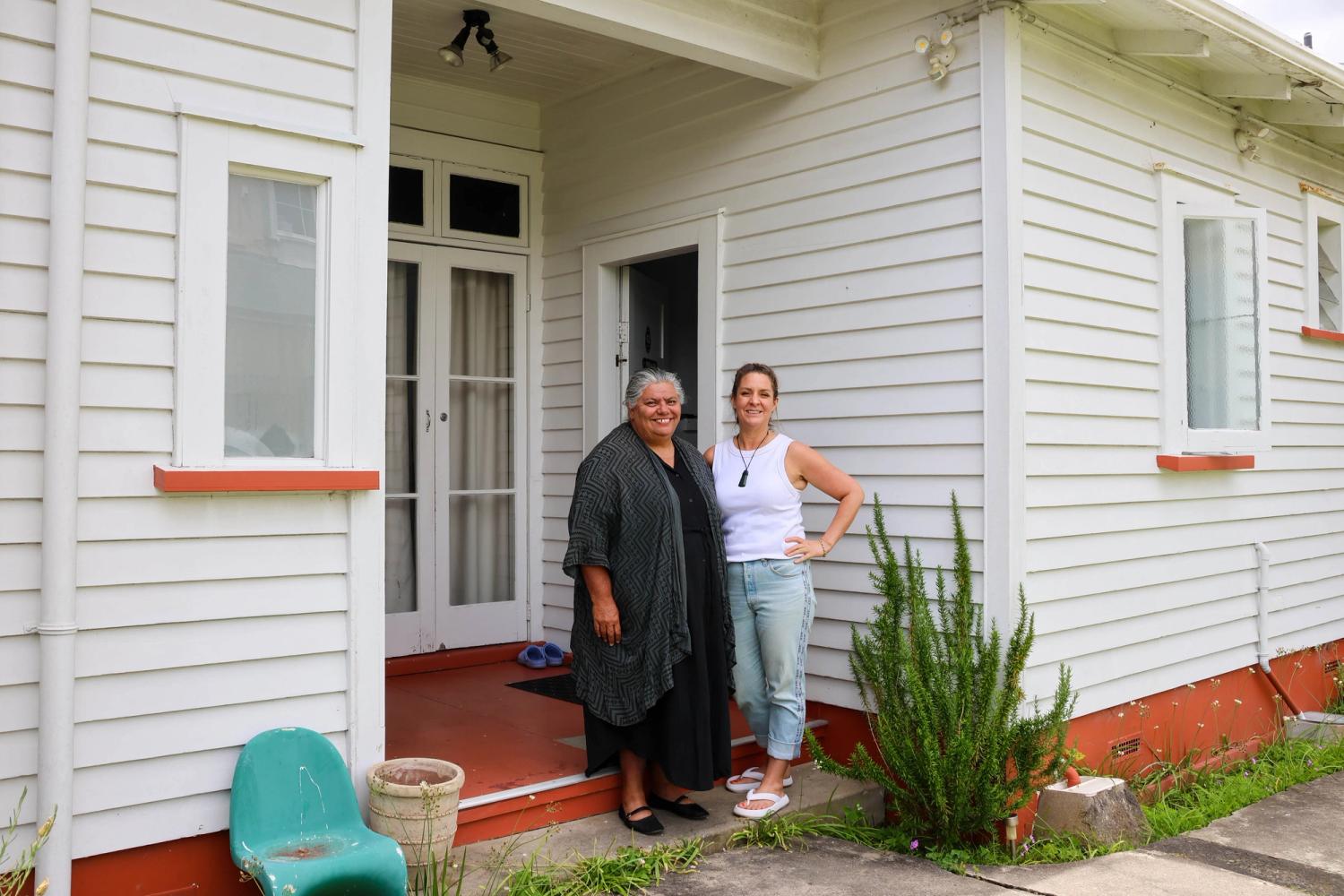
Te Whare Hīnātore: A lighthouse for women experiencing homelessness
Share on
Although more than half of the people experiencing homelessness in Aotearoa are women, most homelessness support services currently available are more suitable for men.
Te Whare Hīnātore is one of the few services designed to meet the specific needs of women experiencing homelessness.
Hīnātore is our 16-bed kaupapa-Māori-led transitional housing service for women. Here we provide a safe, supportive community where women can heal and learn the life skills they need to be able to sustain permanent housing.
“Hīnātore is our atua wāhine (goddess) of hope and potentiality, from the family of light. Here at Te Whare Hīnātore, we're a lighthouse for the wāhine. A light in the darkness. When things get rough out there, they know where to come for shelter, for kai.”
“Our job at Te Whare Hīnātore is to keep our wāhine safe, to provide them with a sense of belonging, a sense of knowing who they are and to support them to become the mana wāhine (powerful women) that we know have been pulled into the darkness” – Tui, Kaiwhatu|Co-leader, Te Whare Hīnātore
Almost all of the women who come to Te Whare Hīnātore are Māori. Many have been sleeping rough or living in unsafe accommodation, while some are referred by mental health services or Corrections. What they have in common is a history of trauma – and nowhere else to go.
At Hīnātore, they are known as raukura (an adornment of white feathers, symbolising that they are beautiful and treasured). They stay with us for a minimum of 12 weeks – longer if they need to – and we provide wraparound care tailored to their individual journeys.
Each programme of care combines one-on-one therapy and practical support with group activities, both at Hīnātore and out in the community. Woven throughout is a focus on connection – to whenua (land), to whakapapa (genealogy) and to the community.
Programmes can include support to address substance dependency, parenting courses, art therapy, kapa haka, psychotherapy, raranga (weaving), meditation, rongoā (Māori medicine), aqua aerobics and a Tiaki Whenua rōpū (which cares for the local environment). Raukura also share responsibility for chores around the Whare, giving them skills they’ll need to manage their own homes.
“When wāhine leave Hīnātore, our goal is that they will have the skills in their kete to live independently, to engage in their community and to continue to access the learnings that will ultimately help them into employment. For those that have children, part of the goal is that they reconnect with their whānau.”- Tui
Raukura are encouraged to gain work qualifications and experience.
For one, the opportunity to attend a community day at Peter Gordon’s Homeland restaurant led to a job as a demi-chef. She’s since moved on from Hīnātore – living in her own home near whānau and working in a restaurant there.
Another one of the raukura recently secured a work placement in an AoD (Alcohol & Other Drug) service after completing a Level 4 Mental Health and Addiction qualification during her stay at Te Whare Hīnātore. She had come to Hīnātore following treatment for her own substance use - to support her ongoing recovery in a safe, healthy environment. When she was ready, we helped her regain custody of her children and find a three-bedroom home for her whānau.
Some of the raukura who come to Te Whare Hīnātore are pregnant and in urgent need of a safe place to stay. At Hīnātore, we provide a stable, nurturing environment where they can focus on their health, access support services and prepare for motherhood. We help them find permanent housing before their baby is born, giving them time to settle, nest and create a home. “Over the last 12 months we’ve found homes for eight hapū māmā (pregnant mothers). They still connect in with us, and they're now in relationships that are happy and healthy. If they aren't with their partner, they have connected back with their own whānau, and they are learning how to love and to be loved.”
The care doesn’t end when raukura are ready to move on. “We are whānau, and we don’t stop being whānau when they leave,” Tui explains. We continue to support raukura for a further twelve weeks as they settle into their new homes. And even after they have left, many raukura stay connected, stopping by for a cup of tea or catching up at the weekly Mana Wāhine dinners.