
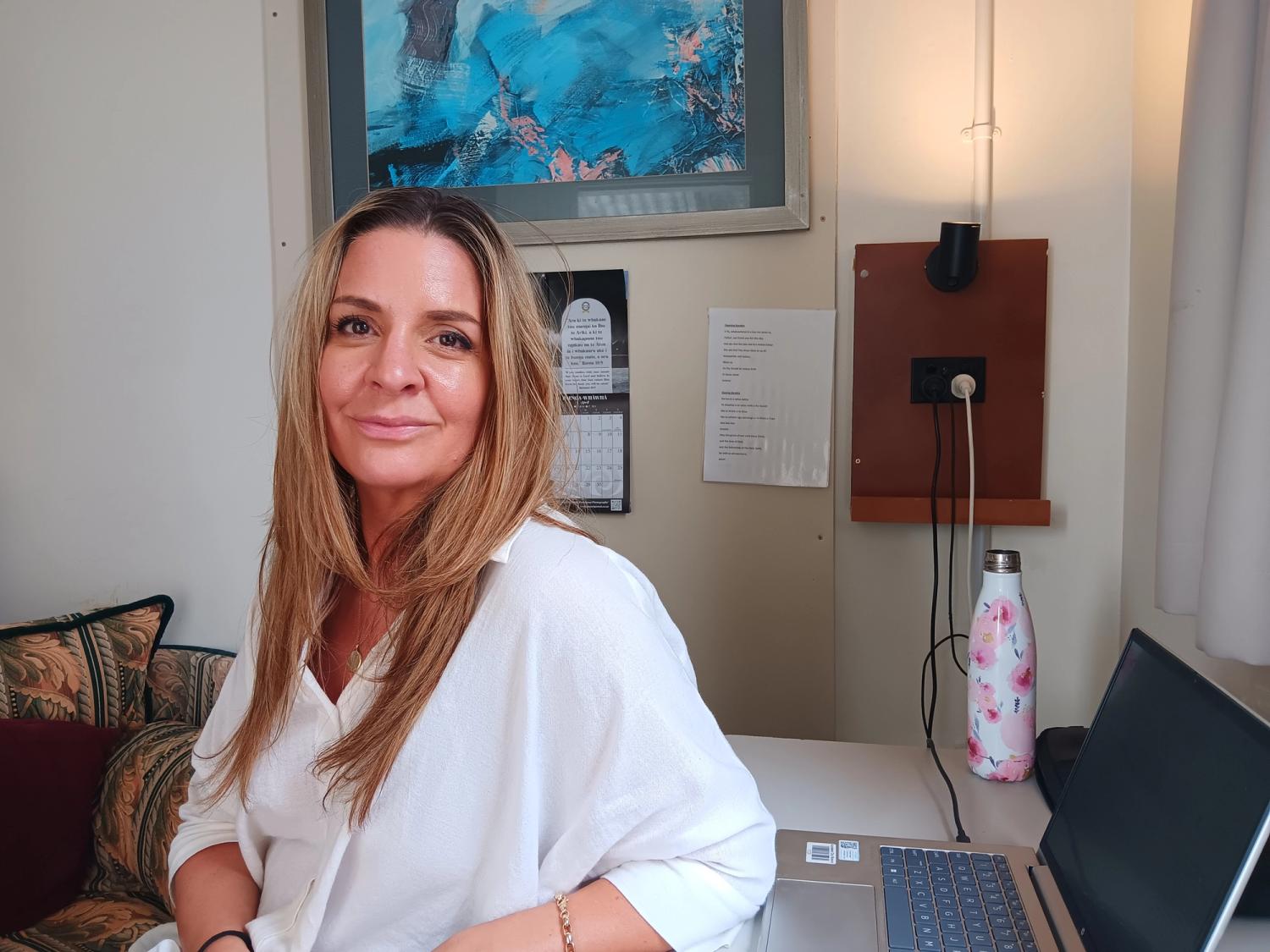
Hayley (Ngāti Whātua) is Kai Atarau | Co-Lead at Te Whare Hīnātore, our 16-bed kaupapa-Māori led transitional housing service for women.
The women who come to Hīnātore are known as raukura. Many have been sleeping rough or living in unsafe accommodation, while others are referred by mental health services or Corrections. What they have in common is a history of trauma – and nowhere else to go.
While more than half of those experiencing homelessness in Aotearoa are women, Te Whare Hīnātore is one of the few services designed to meet their specific needs.
“There is so much need and not many services like this,” reflects Hayley. “Most services are by default more suitable for men, but wāhine have very different needs.”
At Hīnātore, we provide a safe, supportive community where women can begin to heal and rebuild their lives.
“We hold our raukura safe and support them into permanent accommodation - however that may look for them,” says Hayley. “Ostensibly they stay here with us for 12 weeks, but if they need us for longer, we are there for them for longer.”
Hayley first came to the Mission while completing her Masters in Psychotherapy: “I interviewed for a student placement at Hīnātore, but the manager here saw that I’d done a lot of work in AOD (alcohol and other drug) spaces and asked if I was interested in a paid position. I’d always wanted to work somewhere like the Mission so I jumped at the chance!”
Four years later, she now co-leads the service and oversees the clinical team.
“As Co-Lead, I put together care and safety plans when raukura first come in — getting to know them and understanding their needs. Our clinical team then works with raukura on whatever they need to be able to maintain permanent accommodation — whether that is working on AOD dependency, trauma work, life skills, occupational skills, or self-esteem.”
A core part of that work is helping women establish boundaries, routines and a sense of safety. “People come in with a lot of trauma, a lot of displacement,” she explains. “We’re supporting really traumatised people who need to feel safe.”
Almost all of the women who come to Hīnātore are Māori, and Hayley sees how the kaupapa-Māori-led approach helps restore trust eroded through past experiences in mainstream systems. “Because our people have had so many bad experiences accessing services that are not kaupapa Māori, especially in the health and justice systems, there’s no trust there.” Building that trust - and a genuine sense of safety - is the foundation for raukura to re-engage with support services and begin making meaningful changes in their lives.
It is work she describes as a privilege. “It’s a privilege to be alongside people in their time of real vulnerability.”
“One of the things this role has taught me is that it’s important to meet people where they’re at. Our raukura have it within themselves to know what they need — we can’t make those decisions for them or come in with preconceived ideas.”
She has also learned the importance of recognising small steps forward. “Sometimes a small change or a seed sown is a really huge thing for our raukura. So it’s really important to take those wins.”